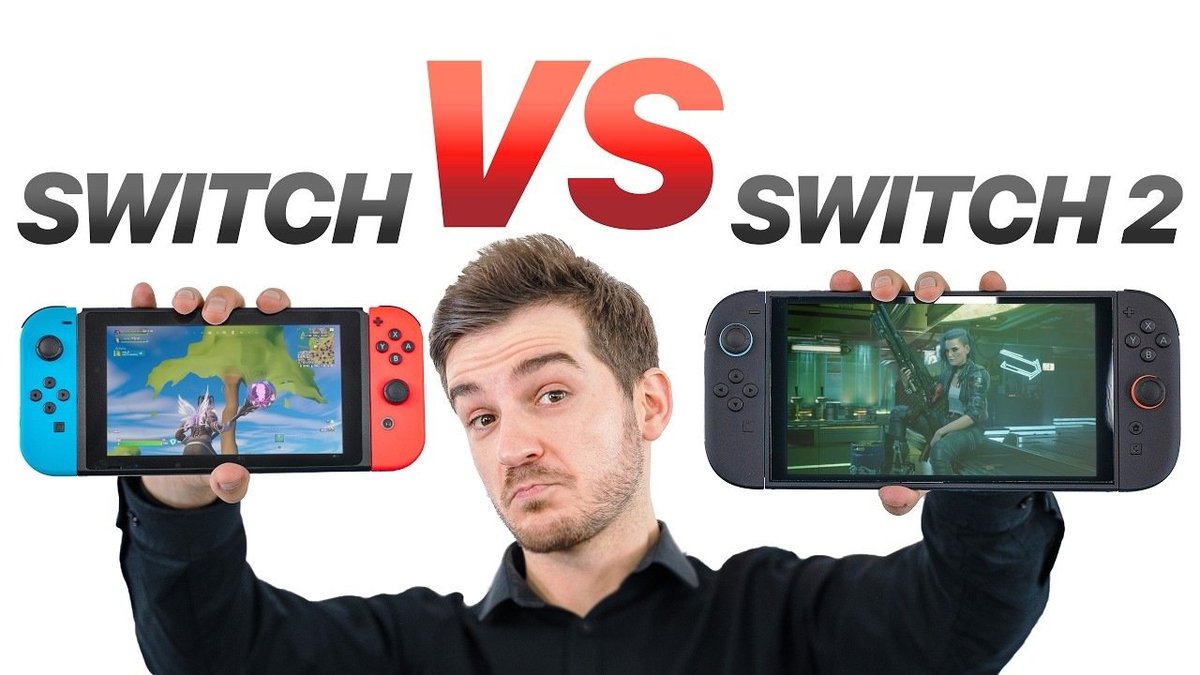
The gaming world is buzzing, and if you're navigating the hardware landscape right now, one question is likely at the forefront: how does the much-anticipated Nintendo Switch 2 stack up against the Original Switch and competitor consoles? It's a vital comparison, especially if you're eyeing an upgrade or making your first foray into Nintendo's hybrid world. Choosing the right console isn't just about raw power; it's about experience, portability, and what fits your lifestyle and budget. Let's cut through the noise and figure out which console truly earns a spot in your living room or backpack.
At a Glance: Key Takeaways for Your Console Decision
- Nintendo Switch 2 (Launched June 2025, $449/AU$699): The clear future. Significantly more powerful, supports 4K docked/1080p handheld (120Hz), HDR, and offers near-full backward compatibility. Best for new buyers, upgraders, and those seeking the latest features and future-proofing.
- Nintendo Switch OLED (Launched Oct 2021): Still a fantastic console with its vibrant 7-inch OLED screen and improved kickstand. Graphically identical to the standard Switch. A strong contender if you find it at a discount, but the Switch 2's upgrades are substantial for a relatively small price difference.
- Nintendo Switch (Original/Standard, Launched March 2017): The original trailblazer. Affordable, great for budget-conscious gamers or those who already own one and aren't feeling the upgrade itch. It has an immense game library.
- Nintendo Switch Lite (Launched 2019): The most portable and affordable. Handheld-only, smaller screen. Perfect for younger children or those who only play on the go and prioritize compact size and cost. Cannot play Switch 2 games.
- Competitor Consoles (PlayStation 5, Xbox Series X/S, Steam Deck): Offer higher raw graphical power and different exclusive game libraries. The Switch line, particularly the Switch 2, competes on unique hybrid functionality, portability, and Nintendo's iconic first-party titles, not raw horsepower.
The New Contender: Diving into the Nintendo Switch 2
Nintendo's approach with the Switch 2 isn't a radical reinvention, but rather a robust evolution. It refines everything we love about the original design, packing in substantial upgrades under the hood and in its peripherals. Launched in June 2025 at $449 / AU$699, it's positioned as the premium choice, bringing the Switch platform firmly into the modern gaming era.
Here's what makes the Switch 2 stand out:
- Visual Brilliance: The new 7.9-inch LCD display offers a crisp 1080p resolution in handheld mode, pushing up to 120Hz for incredibly smooth gameplay. When docked, it intelligently scales games to a stunning 4K at 60Hz on your TV, complete with HDR support for richer colors and contrast. This is a game-changer for those with 4K TVs.
- Under the Hood Power: At its core is a custom NVIDIA processor, a significant leap from its predecessor. This means faster loading times, more detailed graphics, and the ability to run more complex games that simply wouldn't be possible on the original Switch hardware.
- More Space to Play: Storage gets a massive boost from 32GB to 256GB internally, ensuring you can download more games without constantly managing space. While it still supports expandable storage, note that it uses microSD Express cards, which aren't compatible with older Switch microSD cards.
- Enhanced Connectivity: With Wi-Fi 6, you'll experience faster and more stable online gaming and downloads. Bluetooth connectivity also gets an upgrade. Plus, an additional USB-C port on top expands your charging and accessory options.
- Redesigned Joy-Cons 2: These aren't just bigger; they're smarter. They connect via magnetic snapping, feel more robust, and feature larger SL/SR buttons for improved ergonomics. A brand-new "C button" facilitates GameChat (voice/video chat and online split screen), and an optical sensor even offers a unique "mouse mode" functionality.
- The New Dock: Slimmer, softer, and more rounded, the redesigned dock isn't just aesthetically pleasing. It boasts built-in cooling, an Ethernet port for stable online play, HDMI, and two USB ports, all while supporting that crisp 4K output.
- Improved Kickstand: Say goodbye to the flimsy strip of plastic! The Switch 2 features a full-back coverage, multi-angle adjustable kickstand, making tabletop play far more stable and enjoyable.
- Immersive Audio: Built-in noise-cancelling microphones and 3D Audio speakers promise a more immersive experience whether you're gaming solo or chatting with friends.
- Backwards Compatibility: Nintendo has ensured near-full backwards compatibility with existing Switch 1 games. This means your treasured library isn't obsolete, allowing you to enjoy your classics with potentially improved performance on the new hardware.
Generational Leap? How the Switch 2 Stacks Up Against Its Ancestors
Understanding the Switch 2's place requires looking back at the foundation Nintendo built. Each iteration of the original Switch had its niche; the Switch 2 aims to be the undisputed champion of them all.
Nintendo Switch 2 vs. The Original Switch (2017 Model)
This is where the difference is most stark. The original Switch, launched in March 2017, was revolutionary for its hybrid concept but is showing its age.
- Display: The original's 6.2-inch 720p LCD (60Hz) is dwarfed by the Switch 2's 7.9-inch 1080p LCD (120Hz) with HDR. Text readability and visual fidelity are vastly superior on the Switch 2, especially in handheld mode.
- Performance: The Switch 2's custom NVIDIA processor is a generational leap. You'll see better frame rates, higher resolutions, and more sophisticated graphical effects in Switch 2 games. While the original can output 1080p docked, it's often an upscaled 720p image; the Switch 2 delivers native 4K docked.
- Storage: 32GB vs. 256GB. It's no contest. The Switch 2's larger internal storage means less reliance on external microSD cards, though remember the new microSD Express cards are required for expansion.
- Features: The Switch 2 boasts a robust kickstand, 3D Audio, noise-cancelling mics, improved Joy-Cons with magnetic snapping and a 'C button', Wi-Fi 6, and an extra USB-C port – all absent or inferior on the original.
- Price: The original Switch is significantly cheaper now, making it a budget-friendly entry point to a massive game library.
Verdict: If you own a launch Switch 1, upgrading to the Switch 2 is a highly recommended generational leap. If your old console is showing wear or you have a 4K TV, the decision is even clearer.
Nintendo Switch 2 vs. The Switch OLED Model (2021)
The Switch OLED was a significant upgrade over the original, primarily focusing on its stunning display. This makes the comparison with the Switch 2 more nuanced.
- Display: The OLED's 7-inch OLED screen is incredibly vibrant with true blacks and infinite contrast, something LCD technology struggles to match. However, the Switch 2's 7.9-inch LCD offers a larger screen, higher resolution (1080p vs. 720p), a 120Hz refresh rate, and HDR support. While OLED visuals are punchy, the Switch 2 offers a larger, sharper image with smoother motion and better docked resolution.
- Performance: This is the key differentiator. The Switch OLED performs identically to the standard Switch in terms of processing power. The Switch 2, with its new NVIDIA processor, offers a dramatic increase in power, enabling 4K docked output and more demanding new games.
- Dock & Kickstand: The Switch OLED introduced an improved kickstand and a wired LAN port in its dock. The Switch 2 further refines the kickstand (full-back coverage) and its dock adds a cooling fan for 4K performance, along with the other connectivity upgrades.
- Price: The price difference between the Switch OLED and the Switch 2 is relatively small, making the Switch 2's comprehensive upgrades a much better value for new buyers.
Verdict: If you already own a Switch OLED, it's still a fantastic console. However, if you can stretch your budget, the Switch 2 offers significant performance and feature advantages, making it the better long-term investment and the recommended choice for new buyers.
Nintendo Switch 2 vs. The Switch Lite (2019)
The Switch Lite serves a very specific purpose: portable-only gaming. It's the smallest, lightest, and most affordable of the bunch.
- Form Factor: The Lite's 5.5-inch 720p LCD screen and fixed Joy-Cons make it ultra-portable but limit its versatility. The Switch 2, while larger with its 7.9-inch screen, still offers a fantastic handheld experience but with the added benefit of TV play and detachable Joy-Cons for multiplayer.
- Functionality: The Lite cannot connect to a TV and its Joy-Cons are non-detachable, meaning no tabletop multiplayer out of the box. The Switch 2 embraces the full hybrid experience.
- Performance: The Lite has the same processing power as the original Switch. Crucially, the Switch Lite cannot play Switch 2 games. This is a significant limitation for future-proofing.
- Price: The Switch Lite remains the most budget-friendly entry point.
Verdict: If you play exclusively handheld, prefer smaller dimensions for small hands (like young children), and are happy with your Lite, stick with it. However, if you're interested in a bigger screen, significantly more power, TV play, or want to play any Switch 2 games, the Switch 2 is your only option.
Beyond the Nintendo Ecosystem: How the Switch 2 Compares to Competitor Consoles
While the Switch 2 marks a significant upgrade for Nintendo, it's important to frame it against the broader console market.
- PlayStation 5 and Xbox Series X/S: These consoles are powerhouse machines designed for immersive 4K gaming on large screens, pushing incredibly realistic graphics and high frame rates. Their exclusive game libraries, online ecosystems, and raw processing power (especially the PS5 and Series X) far exceed even the Switch 2. However, they lack the Switch's unique hybrid portability. The Switch 2 will likely target 1080p/60fps or dynamic 4K/30fps for its most demanding titles, whereas PS5/Series X regularly hit native 4K/60fps or even 120fps.
- Steam Deck / ROG Ally / Legion Go (PC Handhelds): These devices are perhaps the closest in form factor to the Switch, offering portable PC gaming. They boast more raw power than the Switch 2 and access to a vast PC game library (including many games also on PS/Xbox). However, they often come with a higher price tag, shorter battery life for demanding games, more complex PC operating systems, and don't have Nintendo's exclusive first-party titles. The Switch 2 offers a more streamlined, "plug-and-play" console experience with bespoke hardware-software integration.
Verdict: Nintendo doesn't aim to out-muscle PlayStation or Xbox. Its strength lies in its exclusive games (Mario, Zelda, Pokémon), its unique hybrid design, and the unparalleled convenience of taking your console anywhere. The Switch 2 maintains this identity while significantly narrowing the performance gap, making it a more versatile and capable device within its niche. When considering Should you buy Switch 2?, remember its core value proposition is different from its direct competitors.
Who Should Buy What? Your Personalized Recommendation Guide
Deciding which console is right for you can feel like a puzzle. Here's a breakdown of recommendations based on different user profiles and needs:
For New Buyers / Best Overall: The Nintendo Switch 2
If you're new to the Nintendo ecosystem and money isn't your primary concern, the Switch 2 is the unequivocally best option. It offers the most powerful hardware, the best features, the most future-proof design, and ensures compatibility with all upcoming Nintendo titles. Given the relatively small price difference, it's highly recommended over the Switch OLED for anyone buying their first Switch.
Upgrading from a Launch Switch (2017)
This is perhaps the easiest recommendation. The Switch 2 represents a true generational leap. If your original Switch is starting to show its age, has degraded battery life, or you simply crave modern performance, higher resolutions, and smoother gameplay, the Switch 2 is a must-buy.
Upgrading from a Switch OLED
This is a tougher call because the Switch OLED is still a fantastic console with its beautiful screen. However, the Switch 2 offers significant advantages in processing power, resolution (especially docked 4K), frame rates, and new Joy-Con features. If you can justify the upgrade budget, especially if you play on a 4K TV or desire the best performance for new games, the Switch 2 is recommended. If your OLED is still perfect and your budget is tight, you can probably wait.
Switch Lite Owners
If your gaming is exclusively handheld, you prefer the smaller dimensions, and you're happy with the games you play, sticking with your Lite is perfectly valid. It's built for purpose. But if you're interested in a much bigger, sharper screen, the possibility of TV play, increased power, or playing any new Switch 2 exclusive games, then you absolutely need to investigate the Switch 2. Remember, the Lite cannot play Switch 2 games.
Recent Switch (Standard or OLED) Purchase
If you've just bought a standard Switch or an OLED model, it's likely not worth upgrading to the Switch 2 immediately, unless money is truly no object. Both are excellent systems, and you'll get plenty of enjoyment from them. The original Switch library is staggeringly great and will keep you busy for years.
4K TV Owners
The Switch 2 is strongly recommended for you. Its ability to output 4K resolution (docked) will make a noticeable difference on your television. Upgrading from a regular Switch 1 to an OLED model offers no visual improvement for docked play, so the Switch 2 is the only path to a true 4K Switch experience.
Handheld/Tabletop Play Priority
While the Switch OLED has a beautiful screen, the Switch 2's 7.9-inch LCD, combined with 1080p resolution and a 120Hz refresh rate, is a significant improvement for those who primarily play in handheld or tabletop mode. The larger, sharper screen improves readability, especially for in-game text, and offers a more immersive experience for those with larger hands. The redesigned kickstand also makes tabletop mode much more stable.
For Children
- Small Children (4-7): The smaller, cheaper Switch Lite is often more appropriate. Its compact size is easier for little hands, and its durability (being a single unit) can be a plus.
- Family Console: The Switch 2, with its detachable Joy-Cons 2 and the 'C button' for GameChat (potentially facilitating online family play or split-screen), is ideal as a family console. Its future-proofing also ensures compatibility with all new family-friendly titles.
Seasoned Players / Visual Needs
If you're a hardcore gamer who appreciates visual fidelity, smoother frame rates, and often struggles with reading small text in handheld mode, the larger screen and increased image quality of the Switch 2 are a significant benefit. The upgrade in processing power will be palpable in many games.
Budget Conscious
For gamers prioritizing cost, the regular Switch 1 is still a very good option, especially if you want TV play and access to the vast current library. Keep an eye out for sales. The Switch Lite remains the most affordable choice for strictly portable gaming. These older models may even become collector's items as they become scarcer.
Key Considerations Before You Buy
Beyond the raw specs and recommendations, here are a few practical elements to weigh:
- Backwards Compatibility: The near-full backwards compatibility of the Switch 2 is a huge win. Your existing digital and physical Switch 1 games will mostly work, potentially with better performance. This protects your investment in Nintendo's incredible game library.
- Storage & Expansion: While 256GB is a good starting point, remember that the Switch 2 uses microSD Express cards for expansion, not the older microSD cards. Factor this into your budget if you anticipate needing more storage.
- Joy-Cons 2 & GameChat: The magnetic snapping is a welcome improvement over the original rail system, reducing wear and tear. The "C button" for GameChat is a dedicated feature, suggesting Nintendo is serious about improving online communication and social play directly from the console.
- The Dock & 4K Output: If you own a 4K TV, the Switch 2's redesigned dock with cooling and 4K output is a massive selling point. This alone could justify the upgrade for many.
- Battery Life: Rated for 2 to 6.5 hours (charging in 3 hours), the Switch 2's battery life is comparable to the original, which received an update for 4.5 to 9 hours. For long sessions, a portable power bank is always a good companion.
- Durability and Longevity: Nintendo consoles are known for their longevity with proper care. The Switch 2 represents a refined design, building on years of feedback, suggesting it will offer many years of reliable gaming.
Making Your Move: Deciding on Your Next Nintendo Adventure
Whether you're a seasoned gamer or new to the scene, the choice between the Nintendo Switch 2, its predecessors, and competitor consoles boils down to your priorities. The Switch 2 is undoubtedly the superior piece of hardware within the Nintendo family, offering a compelling blend of performance, versatility, and innovation. It refines the hybrid concept to its peak, delivering a premium experience for those ready to embrace the future of Nintendo gaming.
However, the original Switch and Switch OLED still offer incredible value, especially given their vast, award-winning game libraries. And if pure portability and affordability are your driving factors, the Switch Lite remains a strong contender.
Ultimately, your decision should align with how you play, what features matter most to you, and your budget. With the Switch 2, Nintendo has delivered an upgrade that truly matters, making the decision easier for many to leap forward. But rest assured, whichever Switch you choose, you're tapping into a unique and joyful gaming experience that only Nintendo can deliver.